
Blog
Why Building Automation Decays After Commissioning
Most buildings perform well right after commissioning. Sensors respond, schedules run, and energy numbers improve. Six months later, things drift. Overrides accumulate
Most buildings perform well right after commissioning. Sensors respond, schedules run, and energy numbers improve. Six months later, things drift. Overrides accumulate, sensors go offline, and the system quietly returns to manual operation, with expensive equipment running idle in the background.
Industry studies suggest 30–50% of BAS control points end up in permanent override within two years. Operators have a name for it: automation decay. It's not a software problem. It's an infrastructure problem.
1. Fragile Infrastructure Breaks Automation Before Software Can Save It
Most automation projects invest heavily in software features while relying on fragile underlying infrastructure: AC branch circuits, standalone LED drivers in every fixture, separate 0–10V or DALI control wiring, and brittle gateway integrations. When any of those layers fail—a driver burns out, a control wire gets nicked, a gateway loses sync—the automation rule it depended on fails silently. Operators disable the rule to avoid disruption, and the system becomes expensive monitoring software.
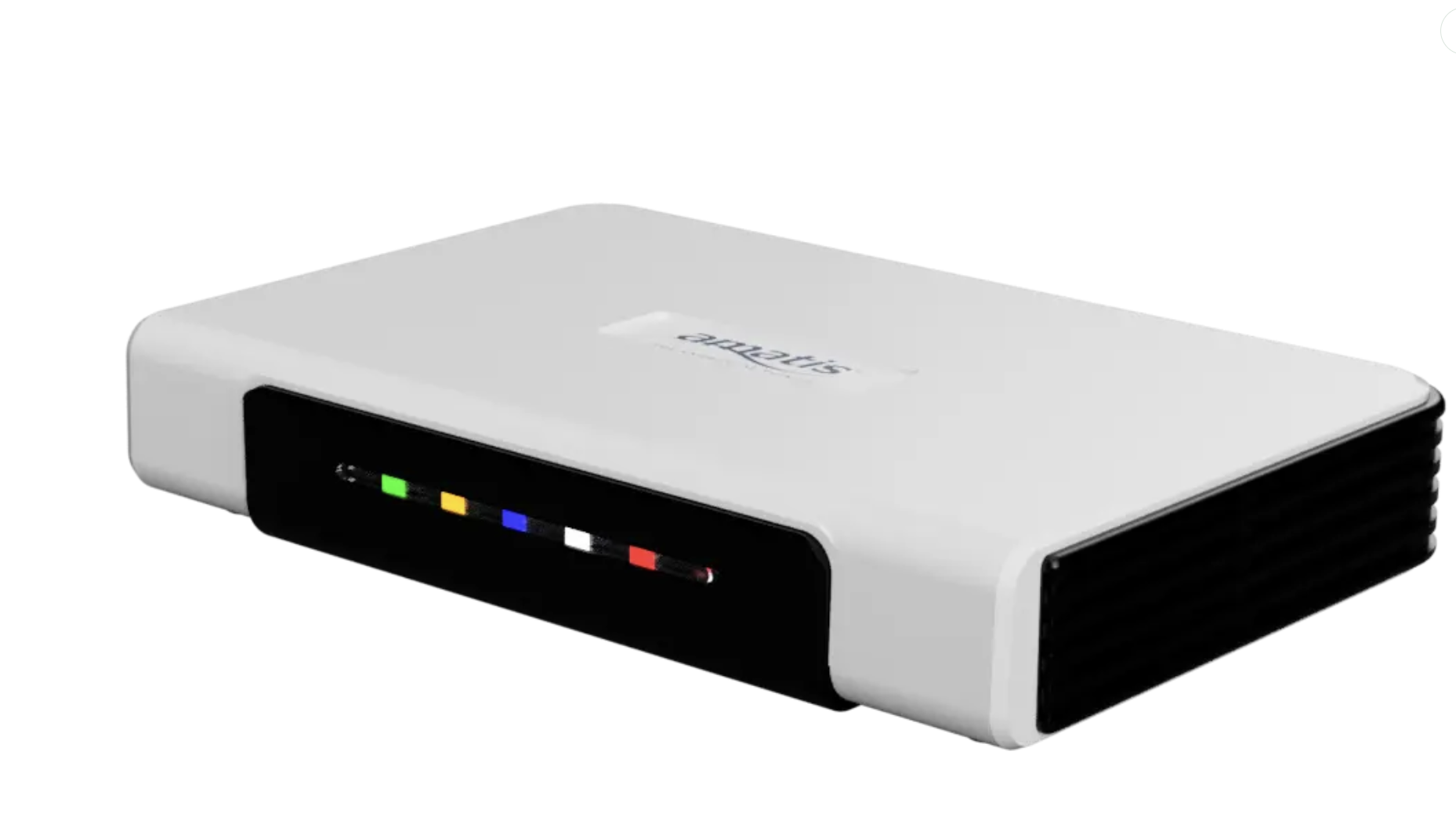
X-PoE eliminates this fragility at the source. The X-PoE lighting controller contains the LED drivers centrally, removing the per-fixture driver entirely. Power, dimming control, and data travel over a single Cat5e/Cat6 cable to each fixture through a simple powered device (PD) adapter. There's no conduit, no separate control wiring, no driver to fail in the ceiling. The XS-108H switch provides 8 auto-sensing ports, each with two individually controllable channels, constant current dimming down to 1%, and built-in power metering with over 95% accuracy — all from a 1U half-rack enclosure in an electrical closet.
Fewer components in the field means fewer failure points. When the infrastructure doesn't break, automation doesn't decay.
2. Device Identity Must Be Built Into the Electrical Layer
Automation only works when the system knows exactly what each device is, where it is, and what it does. In traditional systems, devices are loosely mapped through BACnet addresses or gateway configurations that drift over time. Replace a driver or swap a sensor, and the automation rule it depended on breaks — often without anyone noticing until a complaint comes in.
X-PoE solves this at the electrical layer. Every port is a uniquely addressable, individually regulated circuit. The switch auto-detects whether a connected load is an IEEE PoE device, a standard X-PoE load, or a custom X-PoE load — and configures accordingly. Each channel has individual power monitoring, so the system knows not just what's connected but how much power it's drawing in real time. Device identity isn't a software abstraction layered on top — it's woven into the electrical infrastructure itself.
When a fixture is replaced, the port still knows its role, its load type, and its power profile. No re-mapping. No broken rules.
3. Control Loops Must Be Transparent, Not Black Boxes
Operators need to answer three questions about any automation event: What rule ran? What triggered it? What changed? When automation is a black box, trust disappears. Overrides take over. And once overrides accumulate, the system is automated in name only.
Luum is built around the opposite principle. The platform provides transparent, inspectable control logic with full visibility into what's running and why. AI-powered diagnostics automatically surface anomalies — a fixture drawing unexpected power, a zone that hasn't responded to a schedule change, a sensor that stopped reporting. Operators don't have to hunt for problems; the platform brings problems to them with context, so they can trust the system's output instead of working around it.
4. Zones Must Match How People Use Space — Not How It Was Wired
Zones in traditional systems reflect wiring layouts, not occupancy patterns. Teams move, conference rooms become focus rooms, an open floor gets partitioned. The lighting zones no longer match reality. Rewiring to fix it? Nobody does that. So operators override, and automation decays further.
With X-PoE and Luum, this constraint disappears. Because there are no hardwired control circuits — no 0–10V wiring, no DALI loops, no dedicated relay panels per zone — zones become software-defined. Reassigning a fixture from one zone to another happens in the Luum app. No rewiring, no electrician, no ceiling access. The X-PoE switch doesn't care which "zone" a port belongs to — that's a software layer on top of stable, individually addressable hardware.
The building adapts as fast as the people in it. When a floor gets reorganized on Monday, the lighting zones can match by Tuesday — not six months later when the capital request for rewiring gets approved.
5. Commissioning Isn't the Finish Line—It's the Starting Line
Buildings evolve continuously. Occupancy patterns shift, tenants change, and equipment ages. Without ongoing verification, performance drifts unnoticed. Most systems give you a snapshot at commissioning and hope for the best. By the time someone notices the problem, months of energy waste and comfort complaints have already accumulated.
Luum turns this model on its head. Because every X-PoE channel reports real-time power data with over 95% accuracy, the platform has a continuous stream of ground-truth telemetry — not estimates, not samples, but actual per-fixture power consumption. Luum uses this to:
- Detect drift in days, not years — real-time dashboards and anomaly detection flag when a fixture, zone, or schedule stops performing as expected
- Track findings over time — persistent site memory means investigations and recommendations don't get lost in email threads or spreadsheets
- Compare against historical baselines — so you can see not just what's happening now, but how it compares to when the system was performing at its best
Commissioning sets the baseline. Luum continuously validates against it.
6. Maintenance Happens in the Closet, Not the Ceiling
This is an underrated factor in automation decay. When a traditional LED driver fails, someone has to get a lift, open the ceiling, swap the driver, and re-commission the fixture. That's expensive, disruptive, and slow — so it gets deferred. The fixture sits dark or stuck at 100%, the automation rule for that zone breaks, and the operator overrides the whole zone to compensate.
X-PoE moves the problem out of the ceiling entirely. The LED drivers live inside the X-PoE switch in the electrical closet — not above the drop tile. If a switch channel needs attention, it's accessible at rack height, no lift required. X-PoE fixtures are driverless, which can increase fixture life expectancy by around 4x compared to traditional driver-equipped luminaires, because the component most likely to fail — the driver — has been removed from the harsh above-ceiling environment.
Fewer driver failures. Easier maintenance when something does need attention. Less reason for operators to override.
TL;DR
Automation decays when infrastructure is fragile. Luum + X-PoE solve this at the foundation:
| Problem | Luum + X-PoE Solution |
|---|---|
| Fragile multi-layer infrastructure | Single Cat5e/Cat6 cable per fixture; centralized drivers in the switch |
| Device identity drift | Every port is auto-detected, individually monitored, and uniquely addressable |
| Black-box control logic | Transparent, inspectable rules with AI-powered anomaly detection |
| Hardwired zones that don't match use | Software-defined zoning — reconfigure in the app, no rewiring |
| Commission-and-forget | Continuous verification via real-time per-channel power metering |
| Ceiling-based maintenance bottlenecks | Drivers in the closet, not the ceiling—accessible without a lift |
When the infrastructure is solid, automation stops being a fragile experiment and becomes a permanent operational advantage.